Meta Launches New AI Smart Glasses, Features Are Amazing
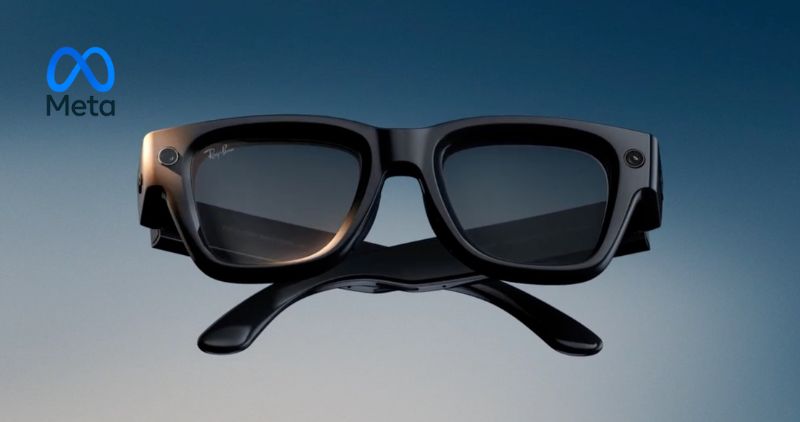
Meta expanded its AI Glasses portfolio at the Connect 2025 event, introducing three new products: the Ray-Ban Meta (Gen 2), Meta Ray-Ban Display, and Oakley Meta Vanguard. These new smartglasses feature improved camera quality, display, battery life, and control options based on AI and EMG (Electromyography) technology. Let’s explore the features and availability details below.
The Ray-Ban Meta (Gen 2), developed in partnership with Meta and EssilorLuxottica, features several upgrades over the first generation. It now supports 3K Ultra HD video capture, including ultrawide HDR and 60fps recording. Modes like hyperlapse and slow-motion will be added via a software update. Battery life will also be significantly improved, meaning it can now deliver up to 8 hours of battery life. Fast charging allows for a 50% charge in just 20 minutes. The charging case can provide an additional 48 hours of backup.
New features include Conversation Focus, which improves the sound quality of the other person in noisy environments. Live Translation support has also been added for German and Portuguese. Design-wise, these will be available in Wayfarer, Skyler, and Headliner styles, and several new color combinations have also been introduced.
Ray-Ban has launched a new category with the Meta Display, featuring an in-lens display and Neural Band EMG control. It can easily display messages, photos, translations, and Meta AI assistance.
The Neural Band is an EMG wristband that can convert even the user’s slightest muscle activity into commands. It’s designed for accessibility and can be controlled with even small movements. These glasses can provide 6 hours of backup and last up to 30 hours with the charging case.
The Neural Band comes with 18 hours of backup, IPX7 water resistance, and durable Vectran material. These glasses offer advanced features like step-by-step guidance, video calling, live translation, navigation, and gesture control.
The Oakley Meta Vanguard is specifically designed for sports and high-intensity activities. It features a 12MP camera and a 122° wide-angle lens. It supports 3K video recording, slow motion, and hyperlapse. These glasses can integrate with fitness apps like Garmin and Strava.
For audio, it features the loudest open-ear speakers ever and a 5-mic array, which can reduce wind noise. Oakley’s Three-Point Fit system provides a comfortable wearing experience and is also compatible with helmets and caps. These glasses have an IP67 dust and water resistance rating. Their battery can play music for 9 hours total and 6 hours continuously. The charging case can provide 36 hours of backup.
Meta’s AI Glasses are categorized into different categories: Camera AI Glasses (from the Ray-Ban and Oakley brands), Display AI Glasses (from the Meta Ray-Ban Display), and Augmented Reality Glasses (from the Meta Ray-Ban Display). These glasses are currently in prototype development. All of these glasses aim to provide users with a more connected and smart experience with video capture, fitness tracking, AI features, and intuitive controls.
Regarding pricing, the Ray-Ban Meta (Gen 2) is priced at $379 (approximately Rs. 33,400) and will be available in select countries. Launches in Mexico and India are expected soon. The Meta Ray-Ban Display is priced at $799 (approximately Rs. 70,370). It will be available in the U.S. starting September 30. It will be available in the U.K. It may launch in Canada, France, Italy, and the UK in early 2026. Oakley Meta Vanguard glasses are priced at $499 (approximately Rs. 43,900). They are available for pre-order. They will arrive on October 21st. They will also be available in several countries, including India, by the end of the year.
Meta CEO Mark Zuckerberg said at the big event, “Over the past decade, we’ve learned through Reality Labs that building such an ambitious project relies not only on technology but also on the courage to invent new ideas. Today marks the beginning of a new chapter, not just for AI Glasses, but also for the future of wearable technology.”